
How Many Calories Does Jumping on a Trampoline Burn
Estimated reading time: 9 minutes
Most people think of trampolines as backyard entertainment for kids, but jumping on a trampoline can also become a surprisingly effective workout. A few minutes of bouncing can raise your heart rate quickly, challenge your muscles, and leave you sweating more than expected. That is why many people searching for fun ways to stay active eventually ask the same question: how many calories does jumping on a trampoline burn? The answer depends on several factors, including body weight, workout intensity, and jumping style. However, trampoline exercise is widely recognized as a low-impact activity that can burn a meaningful number of calories while placing less stress on joints than many traditional cardio workouts. Understanding how trampoline workouts affect the body can help families and fitness enthusiasts use them more effectively for both recreation and exercise.

How Many Calories Does Jumping On A Trampoline Burn
The number of calories burned while jumping on a trampoline varies based on body weight, intensity level, and workout duration. On average, moderate trampoline jumping can burn between 200 and 400 calories per hour for many adults. More intense trampoline workouts that include continuous movement, jumping drills, or fitness routines can increase calorie burn even further. Some high-energy trampoline exercise sessions may burn calories at a rate similar to jogging or cycling because the body remains in near-constant motion.
Body weight plays a major role in calorie burn because heavier individuals generally require more energy to move. A person weighing around 125 pounds may burn fewer calories than someone weighing 185 pounds during the same trampoline session. Intensity also matters significantly. Gentle bouncing for recreation burns fewer calories than fast-paced jumping that keeps the heart rate elevated consistently. Understanding how many calories does jumping on a trampoline burn becomes easier when people recognize that trampoline workouts combine cardio exercise, muscle engagement, balance, and coordination all at the same time.
Why Trampoline Exercise Feels Easier Than Traditional Cardio
One reason trampoline workouts have become so popular is that they often feel less exhausting than traditional cardio exercises while still providing strong physical benefits. Running on pavement, climbing stairs, or using certain gym equipment can place repetitive stress on joints and muscles. Trampolines absorb much of that impact through the flexible jumping surface, which reduces pressure on knees, ankles, and hips during movement.
This lower-impact experience often allows people to stay active longer without feeling as much physical discomfort. Even though trampoline exercise may feel lighter or more playful, the body still works hard to maintain balance, control posture, and stabilize movement during each jump. The constant motion keeps muscles engaged while raising the heart rate steadily over time. According to the CDC’s safety guidelines, regular aerobic movement plays an important role in maintaining overall health and fitness. Trampoline workouts can contribute to those activity goals while making exercise feel more enjoyable and accessible for many people.

Factors That Affect Calorie Burn On A Trampoline
Several important factors influence how many calories a person burns while jumping on a trampoline. Body weight is one of the biggest variables because larger individuals naturally use more energy during physical activity. Workout intensity also changes calorie expenditure dramatically. Light bouncing for relaxation burns far fewer calories than aggressive jumping routines that include fast movements, jumping jacks, twists, or high knees.
Workout duration matters as well. A short ten-minute trampoline session may provide a quick burst of activity, while longer workouts create more sustained calorie burn. Fitness level also affects performance because experienced jumpers often maintain higher intensity for longer periods without tiring quickly. Even age and coordination can influence how much effort the body uses during movement. Understanding these factors helps explain why calorie burn numbers vary so much between different trampoline users and workout styles.
Muscles Used During Trampoline Workouts
Jumping on a trampoline activates far more muscles than many people realize. The legs perform most of the visible movement because the calves, quadriceps, hamstrings, and glutes help generate jumping force and absorb impact during landing. However, the core muscles also work constantly to maintain balance and body control throughout each bounce. Even small trampoline movements require stabilizing muscles to react quickly as the body shifts direction repeatedly.
The arms and shoulders also become involved during active jumping routines, especially when people combine upper-body movement with cardio exercises. Over time, regular trampoline workouts can help improve coordination, endurance, and lower-body strength. Because the body remains in motion continuously, trampoline exercise often becomes a full-body activity instead of focusing on only one muscle group. Understanding how many calories does jumping on a trampoline burn also involves recognizing how many muscles work together during each session. The combination of balance, coordination, and cardiovascular effort is one reason trampoline exercise can feel surprisingly intense despite looking playful from the outside.
Can Trampoline Workouts Help With Weight Loss
Trampoline exercise can support weight loss when combined with healthy nutrition and consistent physical activity. Like other forms of cardio exercise, trampoline workouts help create calorie expenditure, which contributes to overall energy balance. Burning calories regularly while maintaining healthy eating habits may help people gradually reduce body fat over time. However, no single exercise alone guarantees weight loss results. Long-term consistency matters far more than occasional intense workouts.
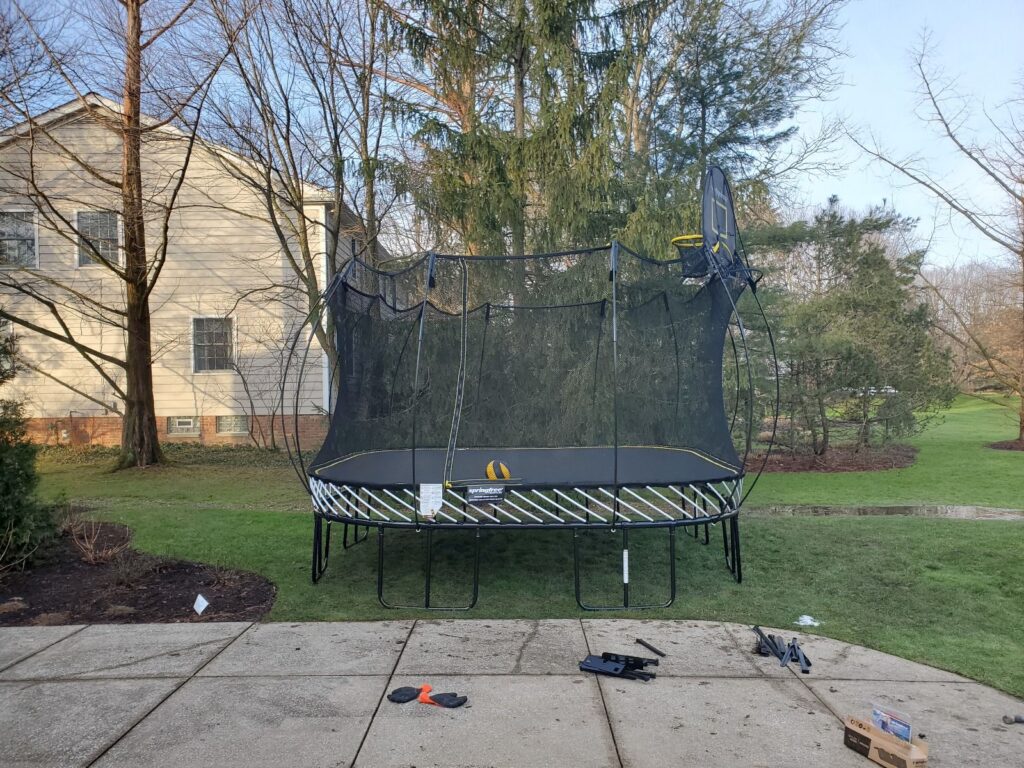
One reason trampoline workouts may support weight loss effectively is that many people enjoy them more than traditional exercise routines. Activities that feel fun are often easier to maintain consistently, especially for individuals who struggle with motivation during repetitive gym workouts. Trampolines also encourage family participation, which can help create more active daily routines for both children and adults. Durable backyard trampolines such as R79 Medium Round create engaging outdoor fitness spaces where families can stay active together more consistently. Understanding how many calories does jumping on a trampoline burn becomes more meaningful when exercise is viewed as part of a sustainable, healthy lifestyle rather than a temporary fitness trend.
How Trampoline Exercise Compares To Running
Many people compare trampoline workouts to running because both activities provide cardiovascular exercise and calorie burn. Running usually burns more calories per minute at high intensity, especially during sprinting or long-distance sessions. However, running also creates more impact on joints, particularly on hard surfaces like pavement or concrete. Trampoline exercise offers a lower-impact alternative that still challenges the heart, lungs, and muscles effectively.
Some studies have suggested that trampoline workouts can produce cardiovascular benefits similar to jogging while reducing stress on the lower body. The rebounding surface absorbs much of the landing force, which may help reduce strain during repetitive movement. This can make trampoline exercise appealing for people who want cardio activity without the joint discomfort sometimes associated with running. While elite runners may still burn more calories overall, trampoline workouts remain an effective option for many individuals looking for fun and sustainable movement. Comparing different forms of exercise helps people choose activities they are more likely to continue consistently over time.
Safety Tips For Trampoline Fitness
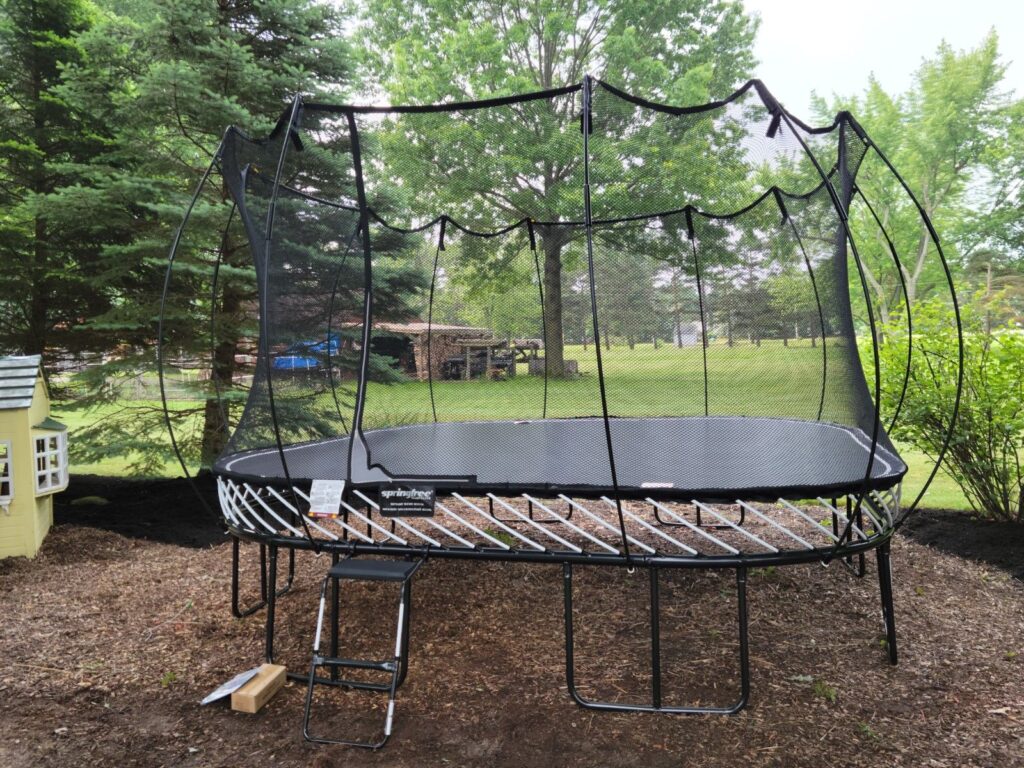
Safety is extremely important during trampoline exercise because improper use can increase injury risk. Jumpers should always use trampolines on stable ground with proper protective equipment and supervision when children are involved. Enclosure nets, padded springs, and quality frame construction all contribute to safer trampoline environments. Jumping with too many people at once increases collision risk significantly, especially during energetic workouts or recreational play.
Warm-ups also matter before trampoline exercise because muscles and joints perform better when prepared for movement. Stretching lightly and beginning with gentle bouncing helps the body adjust gradually before higher-intensity activity begins. Proper footwear and hydration are important as well, especially during longer sessions outdoors. Safety accessories such as the Playground Safety Net can also help create more secure outdoor play environments for active families. Safe trampoline setups encourage more confident movement and better long-term use. Understanding how many calories does jumping on a trampoline burn should always be balanced with understanding how to exercise safely while protecting the body from unnecessary injuries.
Why Trampolines Encourage More Active Lifestyles
One of the biggest benefits of trampolines is that they make physical activity feel less like structured exercise and more like recreation. Many children and adults who dislike traditional workouts still enjoy bouncing, playing games, and moving freely on trampolines. This can lead to more consistent daily movement without the mental resistance that often comes with formal fitness routines.
Outdoor activity spaces also help reduce screen time while encouraging healthier family habits. Children who spend more time outdoors often develop stronger coordination, balance, and confidence through active play. Adults benefit as well because trampolines provide an easy way to stay moving while spending time with family. Understanding how many calories does jumping on a trampoline burn is important, but the long-term lifestyle benefits may matter even more. Activities that people genuinely enjoy are often the ones they continue for years, making consistent movement easier to maintain over time.

Conclusion
So, how many calories does jumping on a trampoline burn? While the exact number depends on factors like body weight, intensity, and workout length, trampoline exercise can burn a significant amount of calories while providing a fun and lower-impact alternative to many traditional cardio workouts. More importantly, trampoline activity encourages movement in a way that feels enjoyable instead of repetitive, which often helps people stay more consistent with exercise over time.
Beyond fitness benefits, trampolines also support balance, coordination, endurance, and active family routines that encourage healthier lifestyles overall. Whether someone is using a trampoline for cardio workouts, recreational jumping, or outdoor family activity, the experience combines exercise with entertainment in a way few workouts can match. To explore outdoor play systems and activity solutions designed to support safe and active play for years to come, visit Kids World Play.